Essay
Someone to Tell You It's Going to Snow
Liechtenstein's public radio closed and an AI station took its place, ten to twenty times cheaper. It kept the news and lost the neighbours.

Every hour, a radio station in Liechtenstein reads the news. The first sentence gives it away: “This is, with artificial intelligence, the voice of Nicky Stettler.” AI writes the bulletin and cloned voices of the newsroom’s own editors read it. Nobody chooses the music either.
The station is called Radio Vaterland. In 2024 a small majority of Liechtensteiners voted in a referendum to privatise their public broadcaster. Privatisation turned out not to be financially viable, so the broadcaster closed and 25 people lost their jobs at once. Radio Vaterland, run by the newspaper Liechtensteiner Vaterland, filled the gap, and its founder told NOS that it costs ten to twenty times less than the old public station. People in Liechtenstein speak an Alemannic dialect among themselves; the AI only speaks Standard German.
What you want from local radio
My first idea was to train a voice in the dialect myself and see what it would cost. Then I realised the dialect wasn’t what bothered me most.
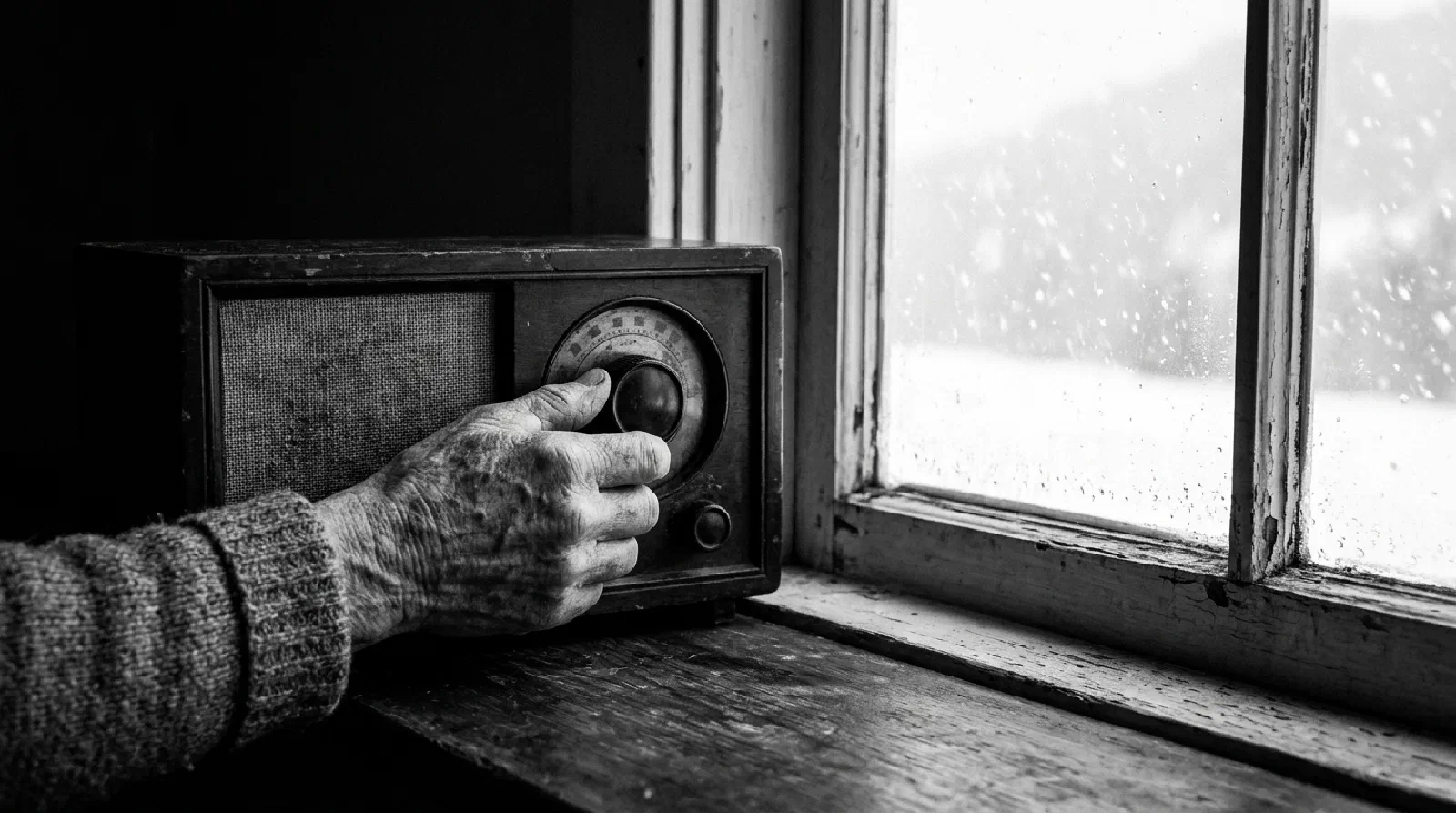
When I listen to something local, I want community more than information, which I can get anywhere. I want to hear the neighbours. Michel Erismann, who worked at the old Liechtenstein broadcaster and is now trying to build a human station from his home studio, put it better than I can: “When it snows here in the Alps, you want to hear someone say: guys, watch out, it’s going to snow like crazy.”
Where we draw the line at work
I build AI systems at a biofuel brokerage in Amsterdam. We are automating a lot of repetitive processes, and I am glad we are. We have never tried to automate the broker.
The reason is the relationship. The broker adds the human layer: going for a coffee, asking a client about their weekend, caring about them. And the broker is not neutral. A good broker takes the client’s side.

I worked through this piece with Gamma, the AI I write with, and at this point it told me that people take sides while machines are built to be neutral. I had to correct it, and the correction is the argument. Technology takes on the intentions of whoever designs it, pays for it and uses it. The broker is on our clients’ side and the local reporter is on the town’s; the machine is on its owner’s. When a community hands its voice to a machine, someone who does not belong to it starts speaking for it.
The machine also flattens. The software behind Radio Vaterland was first used by a station on the island of Helgoland, and its founder now sells it to other stations, one model and one standard language for all of them. A dialect spoken in a country of 41,000 people is exactly what that kind of scale leaves out.
“But they voted for it”
The strongest objection is that nobody took anything from Liechtenstein. The people voted not to pay for their public radio, and if hearing each other mattered that much, they would have paid.
I don’t think the vote settles it. Local radio is a common good, and common goods have a familiar problem: for each neighbour on their own, not paying is the reasonable choice, and when everyone makes it, the town loses something almost everyone wanted without anyone having been wrong. The founder of the AI station admits the other half himself: without the newspaper’s journalists there would be no input for the AI. The machine feeds on human work that someone still has to pay for.
What I would do
Automate the repetitive, never the relationship. Applied to public money, I think that becomes a fairly simple rule.
When public money pays for a common good, such as local media, care or schools, it should pay for people doing the human part: the reporter who interviews the neighbours, the carer who stays for the coffee. Anyone can automate the repetitive part if they want to. And because I am at least half a liberal, the money should come with real demands: renewable contracts, judged by the community itself, by whether people listen, take part and recognise themselves in what they hear, rather than by production metrics that a machine will always win. How to do it is for the town to decide. The level above steps in with money only when the town can’t manage on its own.
Liechtenstein’s government has so far turned down Erismann’s request for funding. In the Netherlands an AI-driven station called TalkRadio launched this summer, and the public broadcaster says it has no plans to follow because “radio is about human connection.”
The cheap option will always sound almost right. Each community has to decide whether “almost” is good enough for the person who tells it that it’s going to snow.
Quotes from NOS are translated from Dutch. How I write with Gamma: see About.